
Key messages
- Shortages are likely on fertiliser and fuel. Secure your supply where you can. Don't wait for your suppliers to call you.
- Think through alternatives for your business so you are prepared in case urea or diesel are not available.
- Use the professional around your business to help you work through options.
Secure supply
Presently, there are few limitations on fuel availability in our region. Use this to your advantage and fill your reserves. At least you will have control if shortages turn up. Shortages are already occuring in other regions.
Urea is likely to be a problem. If you have not secured your supply of N, then this should be your priority. Even with a supply agreement, you may be subject to a Force Majeure and only a portion could be supplied. Use this resource as efficiently as you can.
One of your suppliers is your bank. As you are making commitments to inputs at higher prices, be sure to keep your financier informed if increased costs could affect available limits.
Potential impacts on margins
To give you some perspective, the current five-year average crop profit per hectare (before interest and leasing costs) in the Farmanco Profit Series (high rainfall zones) is $392/ha.
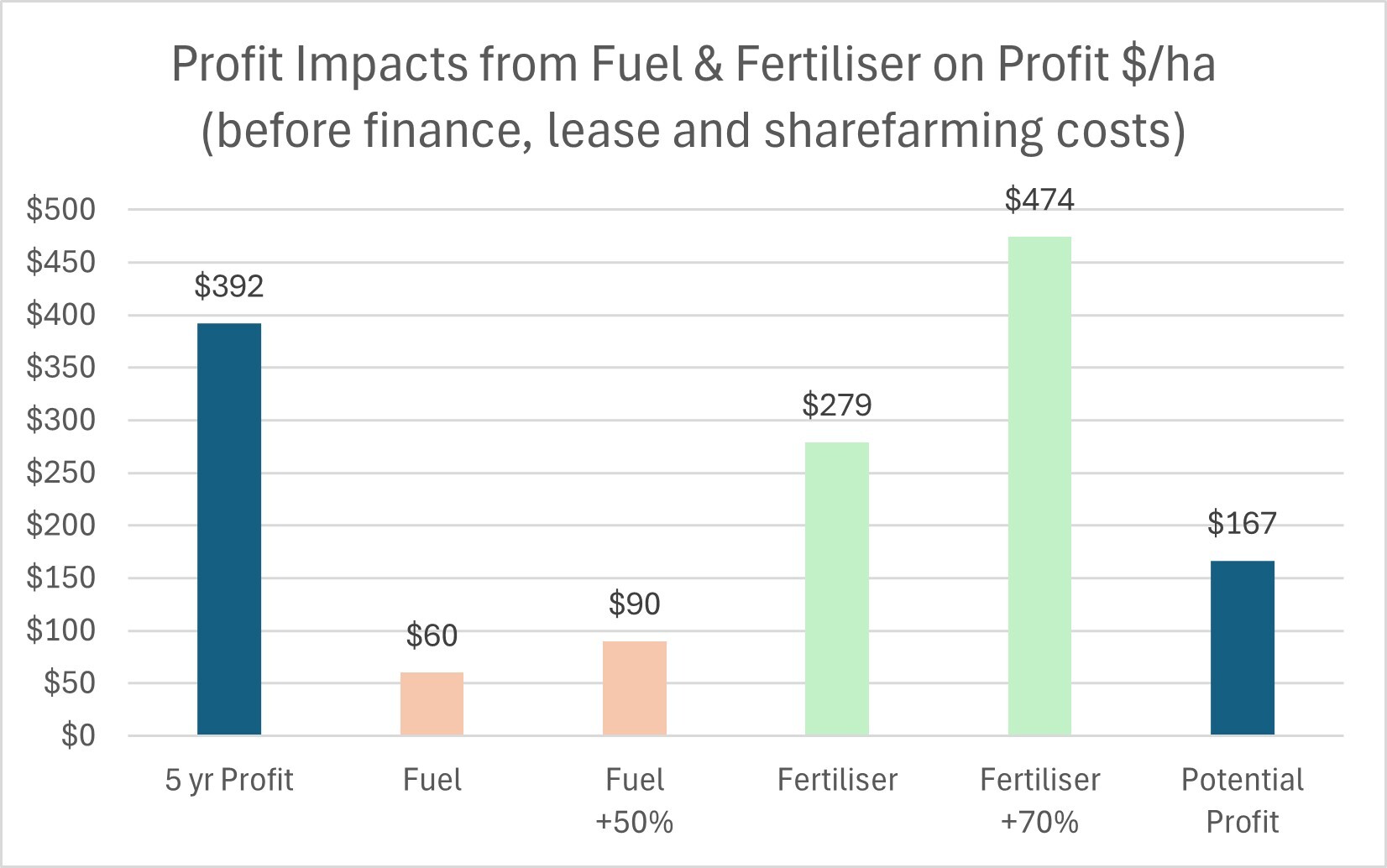
Figure 1: Profit impact ($/ha) from higher fuel and fertiliser costs
A combination of costs at these levels reduces the profit margin from $392/ha to $167/ha.
This is simplistic. There are also flow-on impacts for your own cartage operations and/or contractors, although the magnitude of those impacts differs between businesses, the impact on your business could be significant.
What are growers comtemplating
There are some levers you can pull to manage the impact of these costs.
Things to think about:
- Establishment timing is the most important factor. Don't be distracted from your sowing or paddock preparation timeliness.
- Set lower yield expectations. Be prepared not to have enough urea to get the crop to its full potential. You can always top up if urea subsequently proves to be in good supply.
- Target phosphorus (P) at removal levels - if you have a good P history, good pH and low P retention soils. Most soils in the Riverina have this opportunity.
- More legumes (and in some areas fallow) can help save MAP and leave some urea to direct to higher margin parts of the rotation. Be selective about paddocks.
- For many growers in the region, more pasture is a good option for sheep and/or cattle. You need to ensure you can access the stock to leverage the pasture value - purchase or agist.
- Some clients have deferred normal capital replacement programs opting to see how the season goes.
Summary
The above options might seem extreme. However, they are real options being considered in regions where supply of diesel and fertiliser is already limited.
Be prepared in case this happens more acutely in your region. We think it is a matter of time.
Author
30 March 2026
Share


.svg)
