WHY THIS PROJECT IS IMPORTANT
The Agrifutures Australia Technology uptake program supported farmers in the Riverine Plains region to understand the types of agtech available, and how they can benefit farming operations.
Over 2 years, this project supported the delivery of multiple technology focused events and on-farm trialing. This program enabled Riverine Plains to identify technologies addressing issues of interest in our region, and to work alongside farmers to determine what works well and where things fall short.
This element of the project supported farmers in deciding whether or not to introduce on a new spray technology to their farming operation. It was specifically focused on drones and optical spot-spray technology in broadacre farming systems.
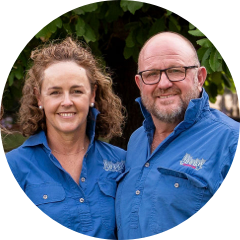
At our Katamatite ‘Harvest Wrap Up’ event in February 2024, we showcased camera spray technologies, discussing benefits and challenges with farmer Craig Thomas (see also this video by AgriFutures, featuring Craig).
Although demonstrating new technologies and seeing the ‘wow’ factor of innovations is important, we also know that working through the decision on whether or not to adopt (and if so – which brand) is a hard decision to make.
As a result, we worked with the team at Rometron Australia to develop a list of things to consider when looking at optical spot-spray technology, which were shared at our February event.
However, we also thought it important to hear from market leaders, so we created a decision support tool for our region. The information below (which was current at August 2024), was designed to provide more detailed information for farmers as a tool to start thinking about spot-spray technology.
In short: There is no ‘best option’ as all farming situations are different and it can be hard to get independent advice on what would suit best. The following decision support tools are designed to understand key considerations when looking at drones and optical spot spray technology, supporting the decision making process.
Focus
As part of the project, Riverine Plains created decision support tools for agricultural drones (spray and spreader drones) and ground rigs to support farmers when comparing technologies and make decisions on which alternative would best suit the needs of their farming systems.
Ground Rigs
Using green-on-brown and green-on-green camera sprayers are becoming more popular in Australian agriculture. These optical spot-sprayers provide targeted weed control and are not only reducing chemical usage, but time spent spraying. With many versions of this technology on the market, it is important to understand the differences between them and what might suit your operation best before upgrading to this technology.
See our comparison of optical spot-spray systems (August 2024) that can be purchased as a tow-behind, self-propelled or retrofitted to existing sprayers. The majority of the brands included are reliable and well-known in Australia for their sprayer technology, however we have included a brand new to market in Australia (BeeLeap) and are interested to find out more and share information that is coming through at a global scale.
Drones
Drones are increasingly used for both spot spraying and whole paddock spraying in broadacre agriculture. as well as for spreading fertiliser, especially under wet conditions or in difficult terrain.
Below is a comparison of commercially available drones (as at August 2024). The drones presented for comparison are part of the DJI Agras range, which are specially designed for agricultural use and are available in Australia. DJI is one of the most trusted drone companies in Australia, however there are other brands that are available and are strong competitors to DJI. Other brands currently available include XAG Australia and BROUAV.
As drone spray/spreader technology is still quite new, another option is to engage with a contractor to complete mapping and spraying before purchasing yourself. SingleShot and StevTech are leading organisations that provide these services.
| Consideration | DJI Agras T10 | DJI Agras T30 | DJI Agras T40 |
| Operating Efficiency | 6.67 hectares/hour | 16 hectares/hour | 21.3 hectares/hour |
| Spraying Tank Volume | 10L | 30L | 40L |
| Maximum Spray Rate | 3 L/min | 8 L/min | 12 L/min |
| Total Weight (without battery) | 12.2kg | 26.4kg | 38kg |
| Maximum Take-off Weight | 26.8kg |
66.5kg (spraying) 78kg (spreading) |
90kg (spraying) 101kg (spreading) |
| Maximum Flight Time | 9 minutes | 10 minutes | 12 minutes |
| Maximum Operating Speed | 7 m/s | 7 m/s | 10 m/s |
| Spraying System |
2 diaphragm pumps Electromagnetic valve |
2 plunger pumps Electromagnetic valve |
Magnetic driver impeller pump Centrifugal valve |
| Droplet Size | 130 - 300 μm | 130 - 265 μm | 50 - 500 μm |
| Spray Width | 3m - 5.5 metres | 4m - 9 metres | 11 metres |
| Spray Height | 1.5m - 3m above target | 1.5m - 3m above target | 3m above target |
| Spread Width | Function not available | 3 - 9 metres | 3 - 9 metres |
| Spreading Materials | Function not available | Solid, dry particles 0.5mm to 5mm in diameter |
Solid, dry particles 0.5mm to 5mm in diameter |
| Recommended Spreading Height | Function not available | 5 metres |
5 metres |
Note: Agras T50 has just been released
Find out more
For further information, please contact Riverine Plains Project Manager, Sabita Duwal sabita@riverineplains.org.au


.svg)

MORE ON Sustainability & Grains
Our research enhances food production, increases environmental resilience and improves community connection across the Riverine Plains. See how our research creates impact.
-
 Soils
Ag Tech
Soils
Ag Tech
 Sustainability
-
 Grains
Sustainability
Grains
Sustainability
-
Grains
Sustainability
Soils
-
Sustainability
 Business
-
Sustainability
 Livestock
-
Business
Sustainability
-
Livestock
Sustainability
-
Grains
Business
-
Grains
Sustainability
-
Grains
Livestock
-
Grains
Livestock
-
Soils
Sustainability
-
Soils
Sustainability
-
Grains
Sustainability
-
Grains
Business
-
Sustainability
 Drought
-
Sustainability
-
Grains
Sustainability
-
Grains
-
Grains
-
Soils
Grains
-
Soils
Sustainability
-
Grains
Soils
-
Drought
Grains
-
Soils
Grains
-
Grains
-
Grains
Soils
-
Soils
Grains
-
 Fodder
Grains
Fodder
Grains
-
Grains
-
Soils
Sustainability
-
Grains
-
Soils
Sustainability
-
Grains
Soils
-
Sustainability
Grains
-
Grains
Sustainability
-
Soils
Grains
-
Grains
Sustainability
-
Livestock
Grains
-
Grains
Soils
-
Grains
Sustainability
JOIN RIVERINE PLAINS
Riverine Plains provides opportunities to see new research and innovation, connect with rural communities, and attend informative events.